
Making Morningstar legible to AI
Role
Lead UX Designer
Project Type
In-House | Morningstar
Year
2026
Restructuring Morningstar’s content architecture to make its expertise easier for both people and LLMs to understand.
The B2B buying journey is changing. In 2026, Gartner reported that 45% of B2B buyers used generative AI during a recent purchase, primarily to gather information about vendors and products.
That meant our website had a new audience to design for: not just the people visiting Morningstar’s B2B website, but the systems interpreting it on their behalf.
The website isn't the first stop
Designing for discoverability
Our SEO team was already studying how Morningstar could become more visible in AI-generated answers. Most of their recommendations were about content, but some affected information architecture, hierarchy, and page structure of the website.
That's where I came in.
Together, we began restructuring parts of the B2B website so the relationships between Morningstar's expertise were clearer to search engines, LLMs, and humans alike.
One idea, many signals
Morningstar wanted to build greater recognition around public-private convergence. But being associated with an idea requires more than mentioning it on a handful of product and capability pages.
We needed a larger body of evidence connecting Morningstar to the topic and its related concepts like private equity, private credit, private markets, and private companies.
Thought leadership gave us the scale to do it.
From collections to a system
We already had topic pages that dynamically collected thought leadership. A page like Private Credit could pull in every article, report, or webinar tagged accordingly.
But each topic essentially stood alone as we had long ago decided to have a flat topic hierarchy.
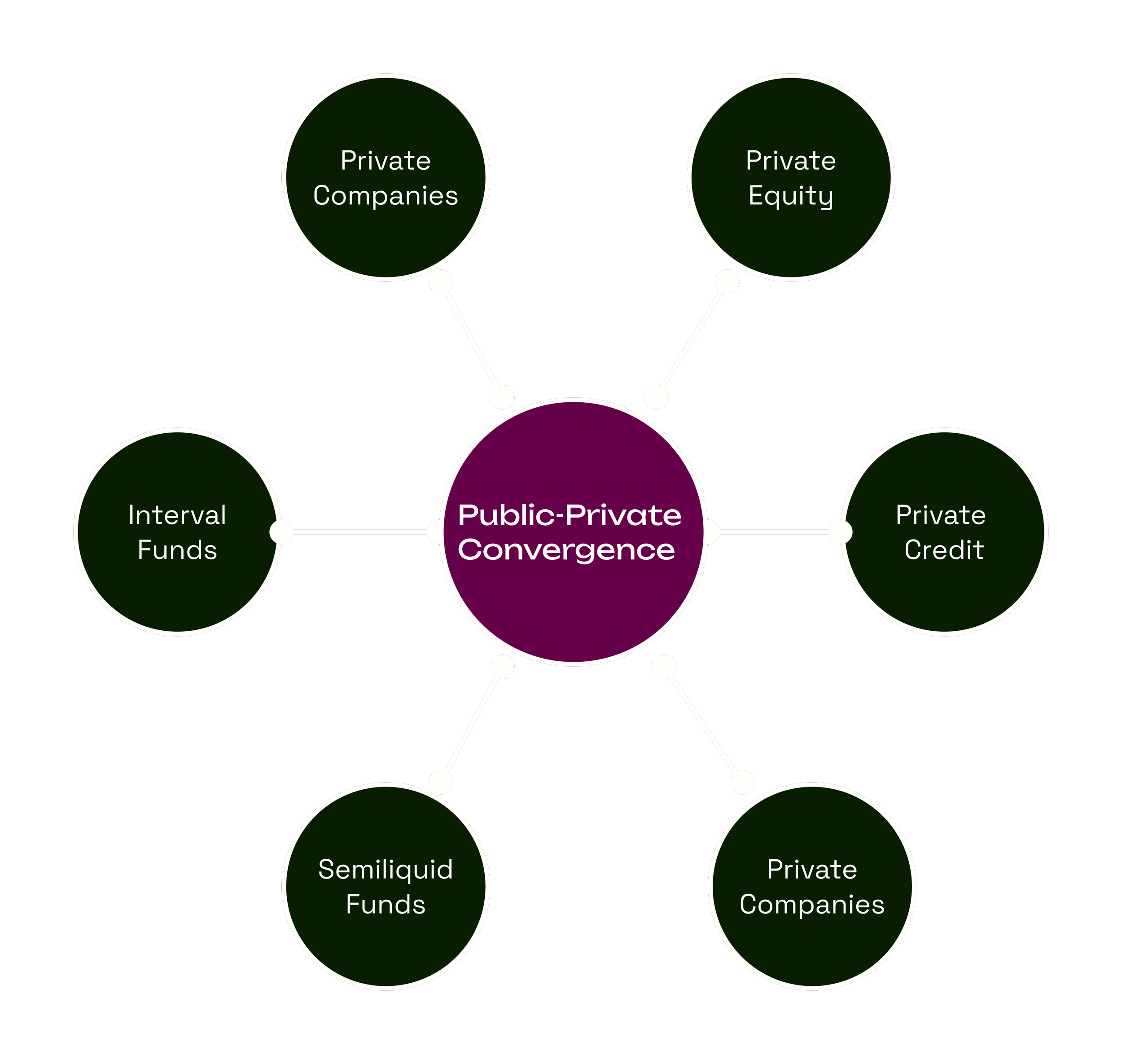
We evolved that model into a hub-and-spoke architecture: broad strategic topics became hubs, while related subtopics became spokes. Individual insights could be tagged to multiple subtopics, with every subtopic connected back to its parent topic.
Making relationships explicit
The architecture established those relationships behind the scenes. We also needed to communicate them on the page.
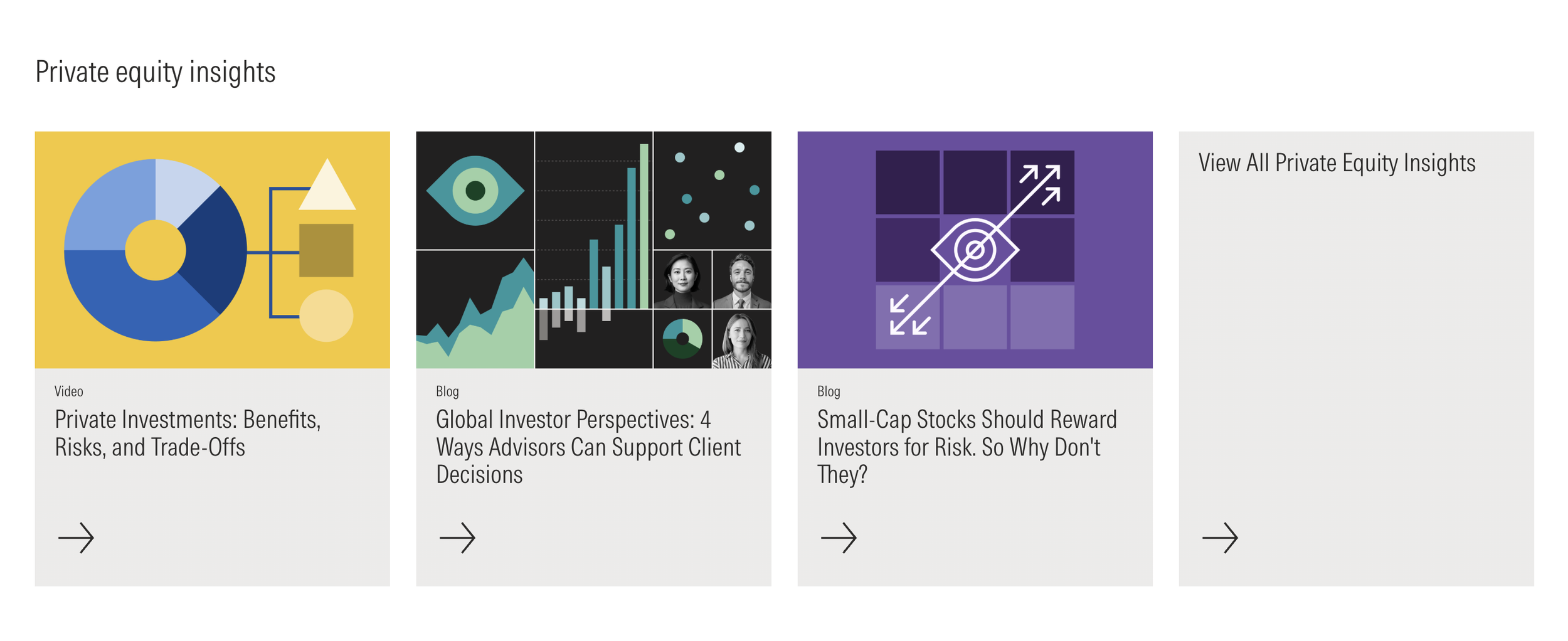
Working from SEO's recommendations, I redesigned our topic template to surface each subtopic as an H2 near the top of the page, paired with three relevant pieces of thought leadership and a path to explore the full subtopic.
We called these sections “blades”.
Building a stronger signal
For Public-Private Convergence, six blades now connect the parent topic to six related areas of expertise.
Each blade gives users a useful path deeper into Morningstar's thinking. At the same time, the headings, links, content relationships, and URL structure create stronger semantic signals about how those concepts relate to one another.
The goal wasn't to stuff the site with keywords. It was to make what Morningstar knows easier to understand.
Designing for two audiences
Historically, I thought about website architecture primarily in terms of the people navigating it.
This project expanded that definition.
Good information architecture now has to help people understand where they are and where to go next while also giving machines enough structure and context to understand what a company knows, what it offers, and how those ideas relate.
For B2B marketers, those are the same design problem.
Outcome
The new architecture and templates launched at the end of September 2026.
As of October 12, 2026, it's too early to claim an impact. We're monitoring whether Morningstar earns more mentions in AI-generated answers around our target topics, and whether those experiences ultimately drive qualified traffic back to the site.
For now, the outcome I'm most interested in is the foundation: a content architecture built not just for today's website, but for how people are beginning to discover information beyond it.